Fattoush Salad
The Fattoush Ontology: Pomegranate, Resilience, and the Philosophical Syntax of the Levantine Plate
1-The Fruit of Paradise: An Axiom of Palestinian Resilience and Symbolic Renewal
The pomegranate’s status in the Palestinian narrative transcends mere horticultural significance; it operates as a metaphysical anchor and a core axiom of cultural existence. Aesthetically assigned celestial provenance ("fruit of paradise"), it embodies the duality of fertility and enduring affection. Crucially, its deep cultivation linkage to sites of conflict, from the Tulkarem mountains to Gaza, transforms the fruit from a seasonal yield into a symbolic counter-narrative. It is the ultimate metaphor for Palestinian resilience (Sumud)—a "ruby phoenix" emerging perpetually revitalised from the ashes of historical disruption. This deep-seated resilience is not just observed but inscribed into the geographical syntax, where place names like Rummanah (a village in Jenin) serve as linguistic fossils, proving the fruit’s sacred, enduring status and its function in defining the aesthetic and semantic parameters of the land.
2. Beyond the Fruit: Interpreting Cultural Depth through Culinary Derivatives.
The exhaustive utilisation of the pomegranate is a study in cultural interpretation—a method of revealing deep cultural knowledge through functional diversity. The derivatives, particularly Pomegranate Molasses (Dibs al-Rumman), are not simple by-products but essential semantic units that carry the fruit's full significance beyond its fresh season. By occupying a non-negotiable space on the Palestinian table, these staples ensure the pomegranate’s perpetual presence, transforming it into a flavour lexicon that codes the region's culinary identity. This pattern, where consumption evolves into an intrinsic part of geographical and architectural naming (e.g., Rummaniyya), demonstrates a deep interrelationship where culture and agriculture achieve a profound ontological symmetry.
3. Fattoush: The Shared Basis of Levantine Culinary Identity
Fattoush is not merely a salad of mixed vegetables; it is an epistemological framework for understanding the unified Levantine identity. Though often ascribed a Lebanese genesis, its true significance lies in its function as a supra-national cultural index for Bilad al-Sham. The critical presence of pomegranate molasses acts as a symbolic semiotic tether, linking the dish to the collective religious and territorial memory. This structural necessity elevates Fattoush beyond a recipe to a unifying social contract. It operates as the signature culinary proposition that proves the historical and social fluidity of Levantine tables, functioning as a vital civilising instrument that synthesises diverse national identities into a shared tradition.
4. The Socio-Religious Trajectory: A Philosophy of Abstinence and Sustenance
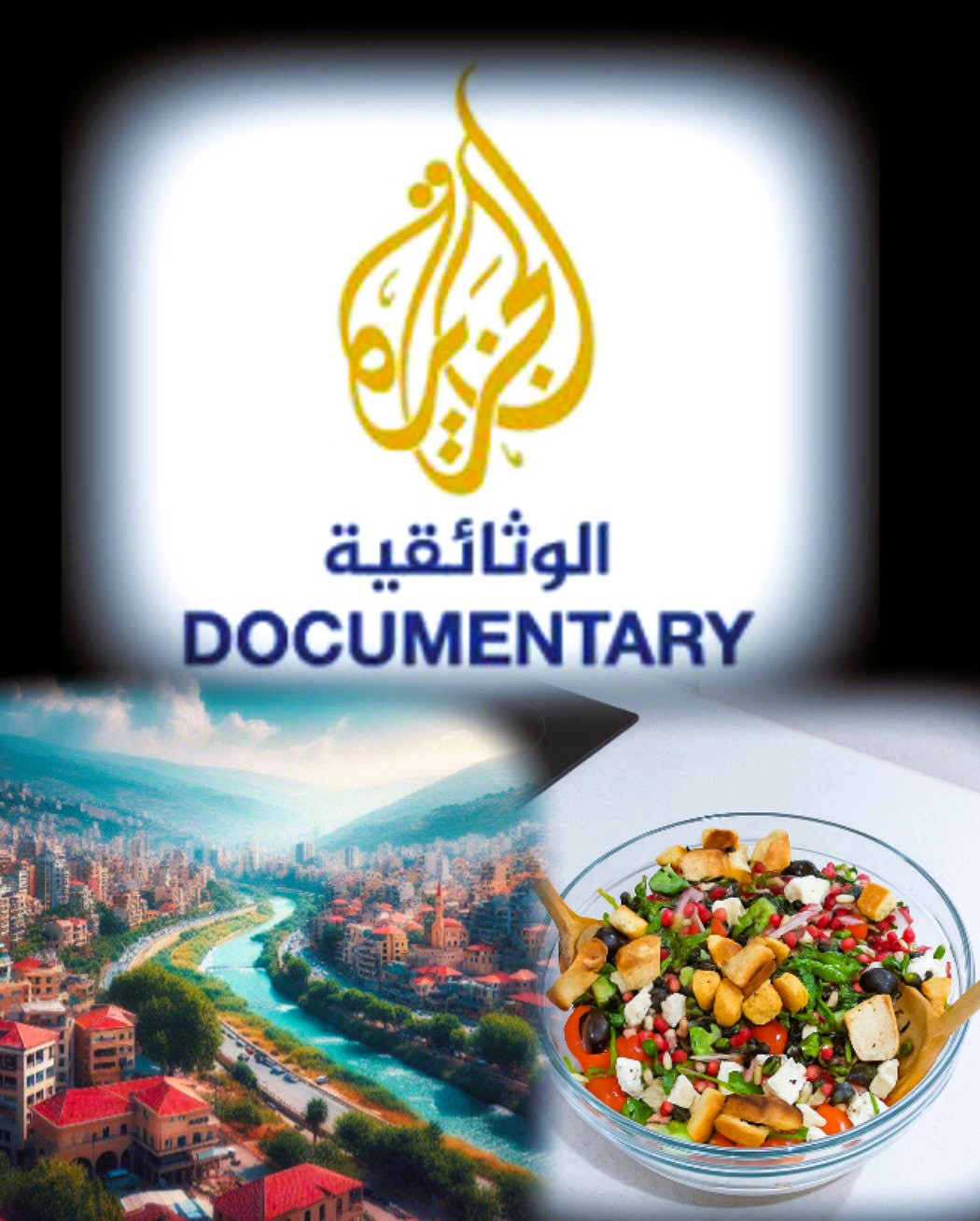
The historical genesis of Fattoush is rooted in a compelling dialogue between necessity and religious stricture. Its development in 1868 Zahle, during the Maronite Lenten fast- According to an exclusive documentary on Fattoush produced by Al Jazeera Documentary- positions it within a philosophy of abstinence. The strategic addition of bread was not merely pragmatic but a powerful statement on sustenance through adaptation, transforming a simple salad into a hunger-satisfying staple that negated the need for meat. Named after the benevolent Al-Fattoush family, the dish absorbed the concept of religious fasting as its core DNA. This made its subsequent seamless transition to Muslim Ramadan Iftar tables a certainty. Fattoush thus functions as a trans-faith culinary model, a universalized testament to food's power to serve physical and spiritual needs, affirming a shared, noble heritage where religious seasons feed and sustain one another.
5- The Philosophy of Culinary Diplomacy: A Trans-Mediterranean Synthesis and Soft Power
The Palestinian rendition of Fattoush, as interpreted by "Teta's Kitchen," embodies a sophisticated act of culinary diplomacy. This dish is deliberately engineered to perform a dual role: first, as an assertion of singularity—strategically intensifying the flavour profile through Pomegranate Molasses and incorporating the deeply symbolic olive to anchor a distinctive Palestinian flavour-signature.
Second, it functions as a bridge, due to the deliberate and optional inclusion of a foreign element—such as Greek Feta cheese—is a strategic gesture of cultural inclusion that facilitates the dish's trans-Mediterranean migration. This move frames the Fattoush not as a fixed artifact but as a dynamic, evolving entity, leveraging soft power by using the universal language of food to link the Levant to the wider Mediterranean basin. The Fattoush thus becomes a novel international recipe that celebrates its deep regional roots while actively participating in a global dialogue of cultural acceptance and exchange. It fundamentally presents itself as a model for heritage preservation through innovation.