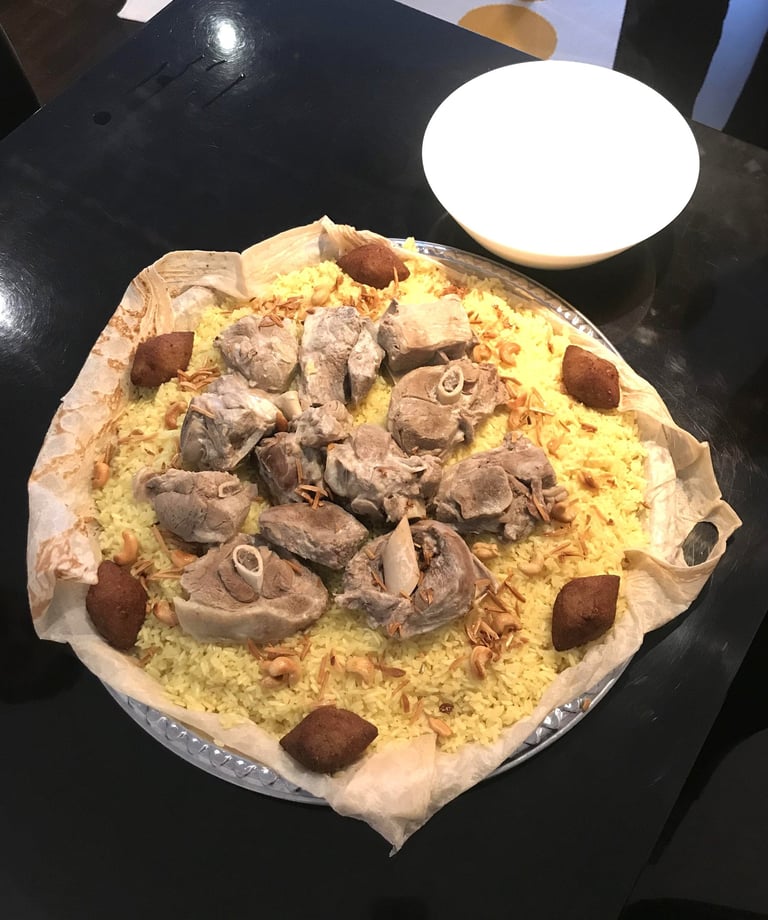
Slow-cooked tender lamb
Mansaf
A Celebration of Bonds
At the heart of every Palestinian celebration lies Mansaf — a dish that transcends mere sustenance, becoming a symbol of family, community, and enduring tradition. It is, above all, a dish of family par excellence: the essence of Ramadan tables that brings together relatives from near and far, weaving bridges of connection, warmth, and shared joy. In its preparation and sharing, Mansaf forms a bond of unity between families, communities, and cultures, emerging as a distinctive social emblem on the map of intimate human connection. More than a meal, it is a sensory and cultural experience, a feast of warmth, pride, and heritage, where aromas, textures, and flavours weave the stories of generations past and those yet to come.
The dish begins with tender lamb, slow-cooked to perfection, resting upon a bed of golden rice subtly infused with the tang of fermented dried yoghurt, known as jameed. The surrounding air is filled with the delicate fragrance of Saj bread and the warm, nutty aroma of roasted nuts. The dish is crowned with thick, creamy yogurt, poured like velvet and finished with a drizzle of golden ghee — creating a harmonious balance of taste, and texture. Every component is deliberate, every detail reflective of centuries of care, devotion, and culinary mastery.
Yet Mansaf is far more than the sum of its ingredients. In the hands of Teta, it becomes a living testament to wisdom, generosity, and the sacred bonds between women and their families. Through her careful selection of ingredients, her intuitive sense of timing and flavour, and her meticulous orchestration of the feast, she transforms cooking into a celebration of life itself. These gatherings do not merely satisfy hunger; they weave communities together, resolve disputes, commemorate heroes, and welcome new generations, all while honouring values of respect, unity, and continuity.
Every plate of Mansaf offers more than ingredients; it presents a river of shared history and culture flowing between the two banks of the Levant — the West Bank and Jordan. Though divided geographically, these lands are united in spirit, converging in a culinary current enriched with dreams, hopes, sorrows, and the blood of generations. Like intertwined veins, the flavours, stories, and traditions of Palestine and Jordan meet and merge, forming a seamless tapestry of identity. Each bite carries the memory of this unity, a reminder to those gathered around the table that culture, heritage, and longing transcend borders, and that the heart of the Levant beats as one.
Mansaf nourishes both body and soul. Each mouthful balances the tenderness of lamb, the fluffiness of rice, the crispness of nuts, and the cool, tangy richness of the yogurt. Yet, beyond taste alone, it embodies the essence of the Palestinian table: a motherly embrace that gathers everyone into a single shared moment, memory, and space.
Here, the table becomes a canvas of unity, a sanctuary impervious to the mechanisation of commerce, the haste of modern markets, and the hollow immediacy of fast food. Unlike meals prepared for convenience or profit, Mansaf demands presence, attention, and reverence.
Through its preparation and communal sharing, Mansaf exemplifies the profound connection between the Palestinian woman and the land she cultivates. It is simultaneously a feast, a ritual, and a moral compass — an edible testament to cultural continuity, social cohesion, and the enduring legacy of wisdom, generosity, and resilience.
In Mansaf, every gesture, every flavour, and every shared bite whispers the story of a people who honour their past, their land, and one another.