Musakhan Rolls
A Golden Embrace of Jenin
Musakhan’s history—the iconic Palestinian staple—predates and transcends the modern notion of aworld record, going far beyond the impressive feat of the largest-ever preparation. Its true heritage stretches back through the veil of time, more than eight millennia before the common era, to the very moment the venerable olive tree first engaged in its ancient dialogue with the hallowed soil of Palestine.
Born in Jenin, a city of roots and return, Musakhan carries within it a bond that is both simple and profound. It stands as a culinary bridge from Jenin’s olive groves to those scattered in exile—those whose hearts remain tethered to the authentic taste of home, often finding a true 'home' in Teta’s kitchen, where the distilled essence of belonging still simmers gently, as it has for generations.
This dish is a living witness-speaking in the primordial tongue of the olive tree, a Language older than memory, yet always understood by the heart.
Olive Trees: A Testament to Endurance
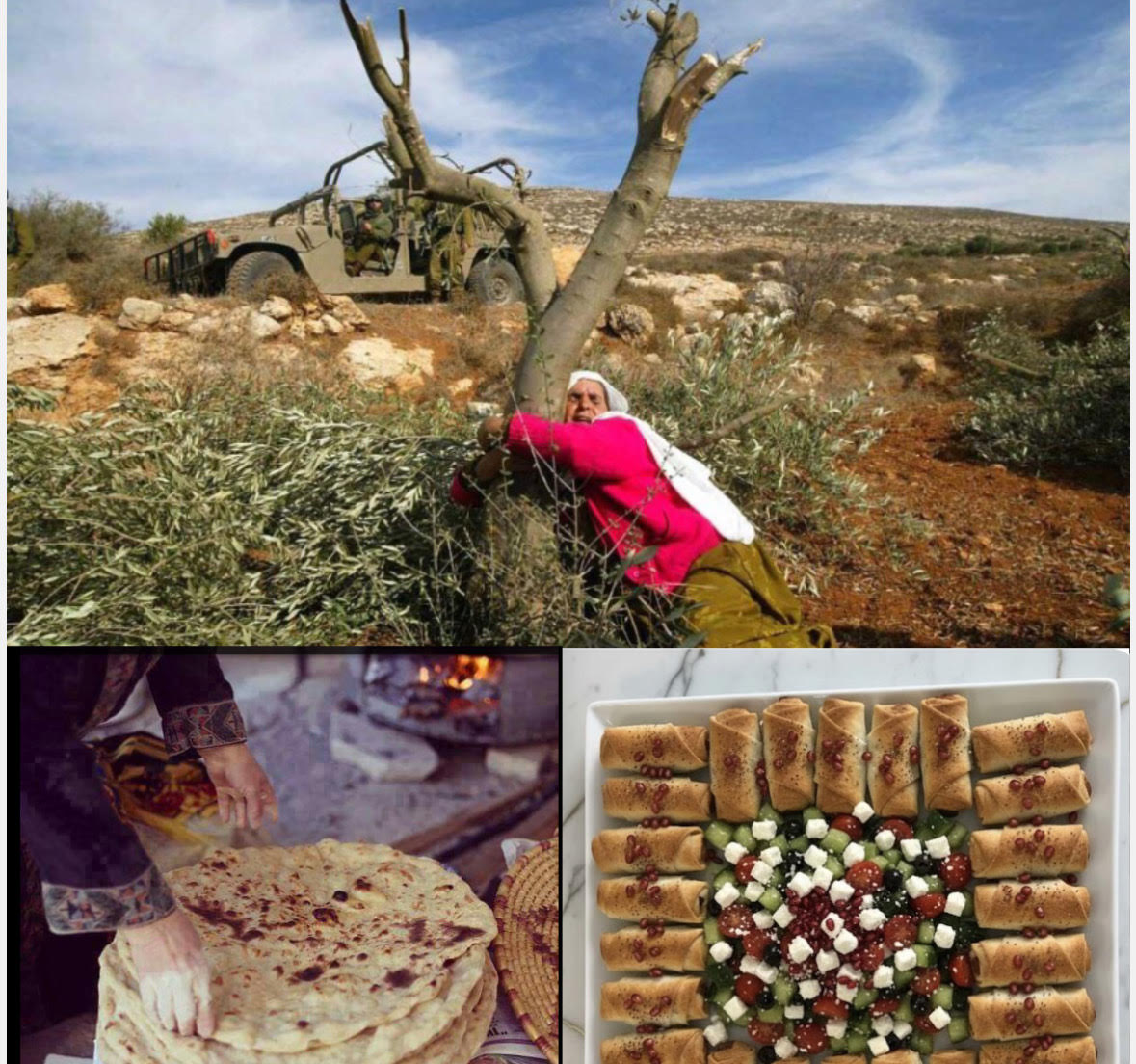
In occupied Palestine, the deliberate uprooting and destruction of olive trees is wielded as a relentless instrument to erase all traces of native belonging. In this context, the olive tree has been powerfully reimagined: it stands as a steadfast symbol of resilience, rooted deeply in history and memory.
The olive harvest season in Palestine is, arguably, unparalleled. It transcends the ordinary rhythms of agriculture or social ritual, rising instead into a solemn and profound expression of survival in the face of cultural erasure and the calculated destruction of memory.
The harvest mirrors the struggle of a people—their resistance and, ultimately, their quiet triumph over persistent attempts to harm their natural heritage. Tragically, the occupation regards these venerable trees not as flora, but as existential threats, seeking their destruction by any means.
The bond between Teta (Grandmother) and the harvest is nothing short of remarkable. She cannot abide the loss of a single olive tree, knowing instinctively that such destruction signifies nothing less than the loss of homeland itself. In Palestine, the land is sacred, and its olive trees are thus martyred—a fate shared by its farmers and freedom fighters.
Every Teta (grandmother) in Palestine resembles a deeply rooted olive tree-unshakable, enduring, eternally connected to the soil of her heavenly garden.
' By the fig and the olive,’ Teta recites from the Qur’an, while she plants and tends her trees and presses their oil, as if it flows from a celestial niche into the vessel of the soul.....
Resistance as Commemorative Praxis
How can a society confront a regime that enforces starvation, economic deprivation, and systematic devastation of agricultural lands? The answer is found in remembrance: the olive harvest becomes a ritual of abundance, gratitude, and enduring resilience.
Under the weight of apartheid, the start of the harvest initiates a series of domestic ceremonies imbued with meaning. Families welcome the first flows of fresh olive oil from the mills with cherished, customary dishes. The simple act of freshly pressed oil saturating traditional bread embodies both the spirit of the harvest and the innate generosity of the land itself.
Around these communal tables, gratitude is more than spoken—it becomes a collective affirmation, resisting imposed division through shared joy and participation. Olive oil functions, metaphorically, as a golden, unifying thread, connecting the inhabitants of the land. Every single drop is a potent signifier—the very lifeblood, the enduring existence, of Palestine.